The technique
Photogravure
The photogravure is the logical, contemporary, non-toxic further development of the highly toxic classic heliogravure by Karl Klitsch from 1878.
A steel plate coated with light-sensitive polymers is exposed under a non-rastered halftone diapositive using a strong UV lamp. The image is then disassembled into dots by a further exposure to aquatint film. The point decomposition is so fine that it is barely visible even under a strong magnifying glass.
After exposure, this plate is washed out in various slightly alcoholic water baths. During processing, the darker areas of the image are gradually washed out deeper than the midtones of the highlights.
After careful drying, the plate is subjected to another post-exposure to harden it for the printing process.
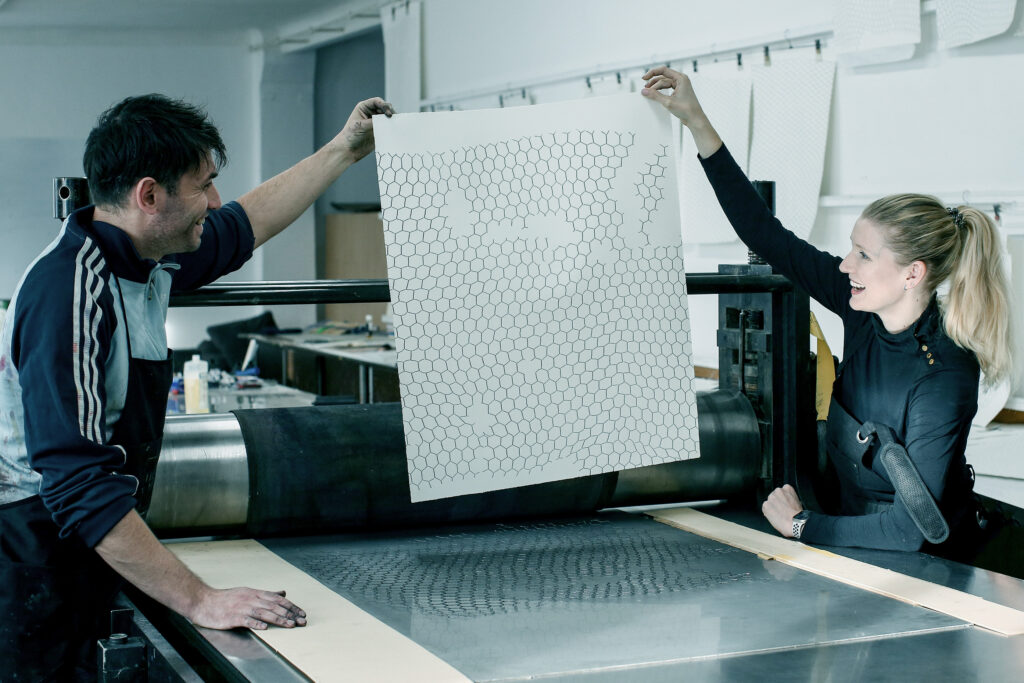
The finished plate is inked with oil paint using a hand roller and wiped with netting, fine, smooth paper and the heel of the hand. The process must be repeated for each individual imprint and is the same as with a classic etching.
The plate is then printed onto moistened handmade paper using an etching press.
Lengthy drying of the paint and careful drying and smoothing of the sheets complete the process.
Due to the relief-like application of color – there is more color on the paper in the dark areas than in the mid-tones and the highlights – the sheets have an inimitable charisma. This quality can only be achieved with hand gravure printing.
The artist
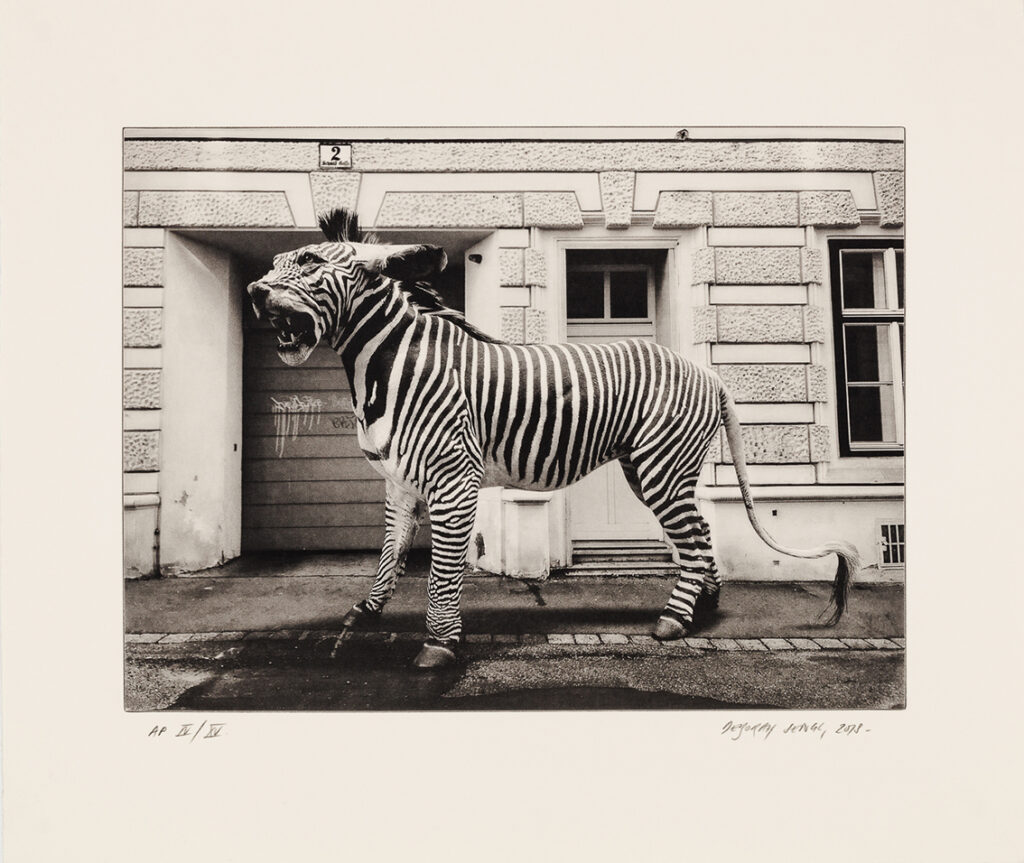
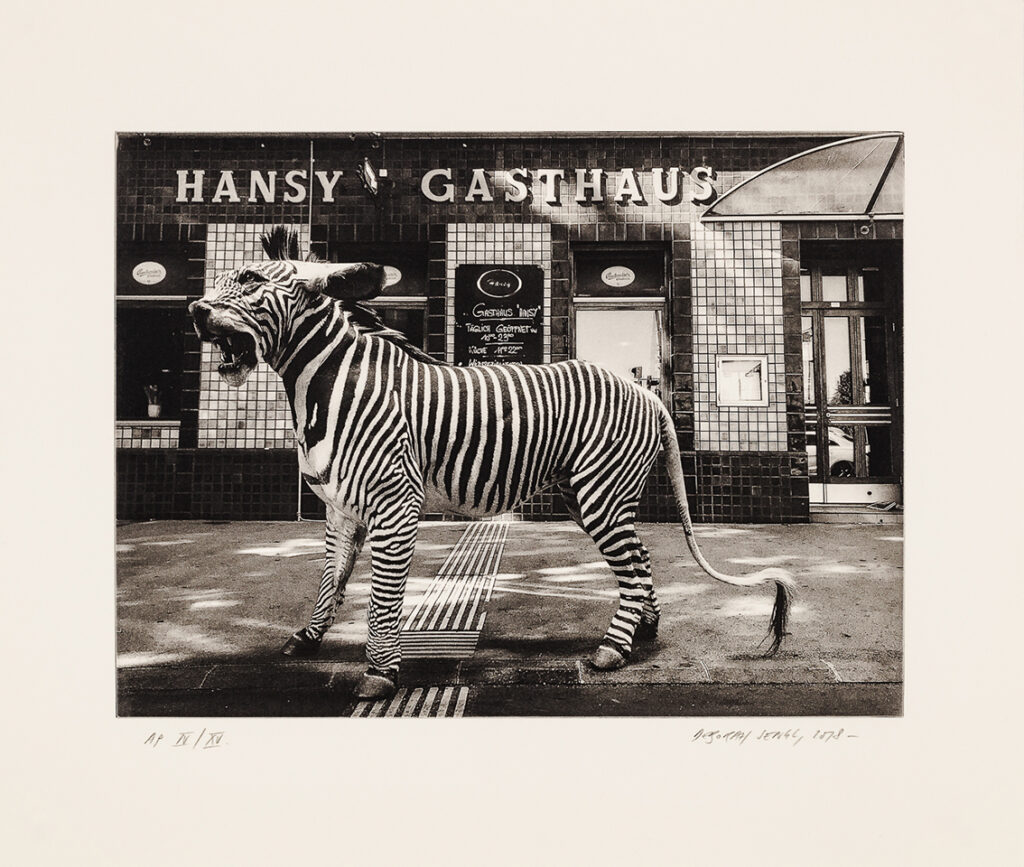
Deborah Sengl
Deborah Sengl, *1974 in Vienna, lives and works in Vienna.
Deborah Sengl's paintings, drawings and sculptures revolve around the "animalistic" character of human beings and around the themes of camouflage and deception. Hereby, Sengl transfers questions of identity and masquerade to the animal kingdom. Associations with social role behavior and perpetrator-victim constellations are inventively brought into clear contours and set within sobering or humorous contexts. The artist wants to read her entire work emotionally, thus focuses on psychological mechanisms and, above all, the importance of empathy.