The technique
Photogravure
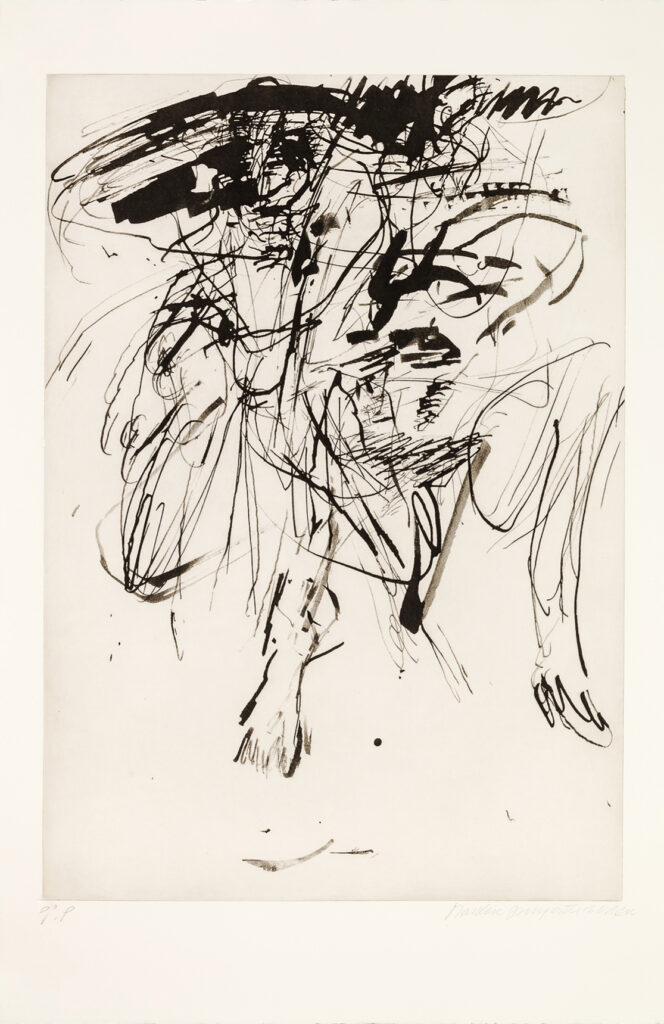
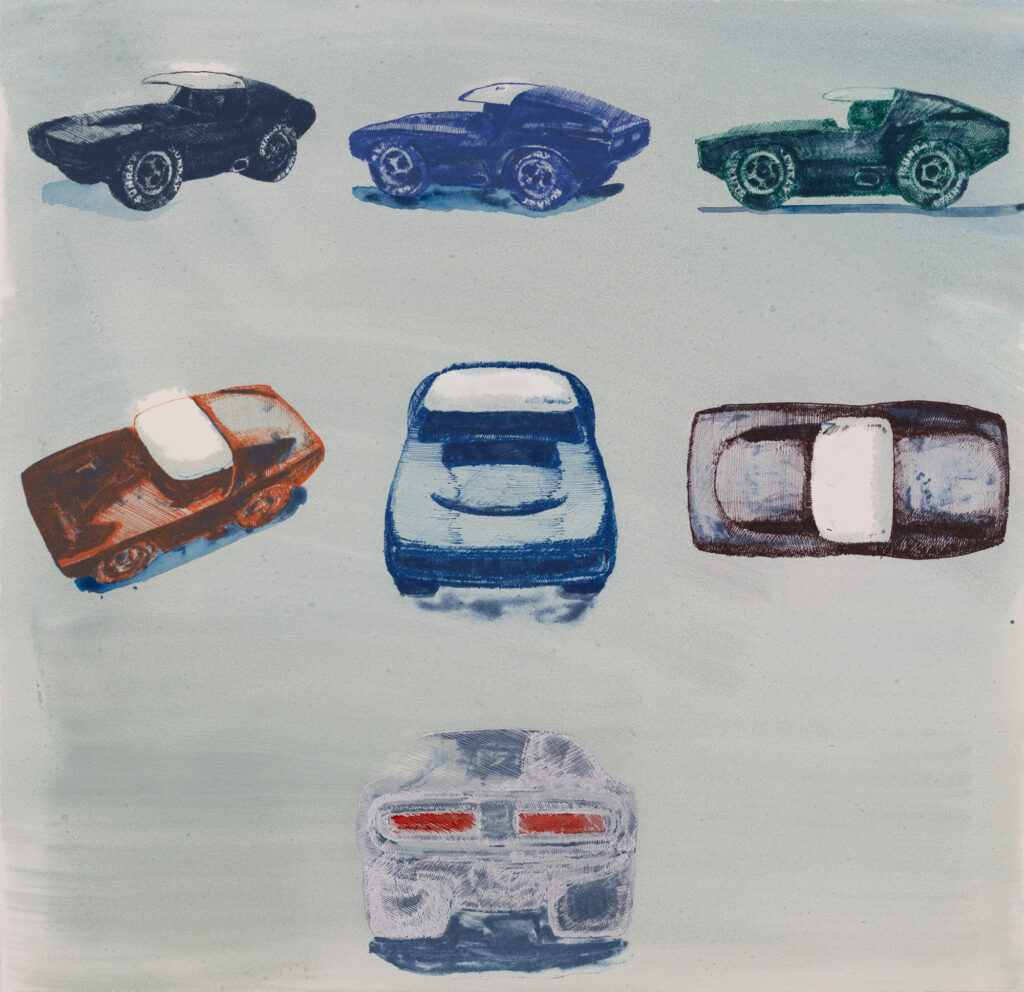
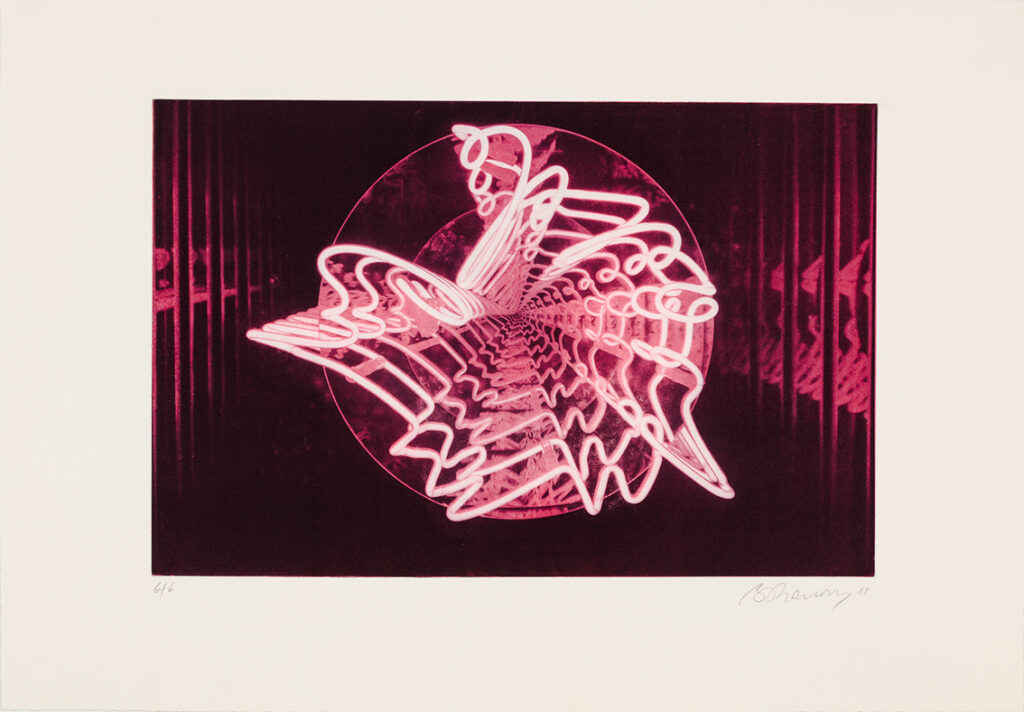
The photogravure is the logical, contemporary, non-toxic further development of the highly toxic classic heliogravure by Karl Klitsch from 1878.
A steel plate coated with light-sensitive polymers is exposed under a non-rastered halftone diapositive using a strong UV lamp. The image is then disassembled into dots by a further exposure to aquatint film. The point decomposition is so fine that it is barely visible even under a strong magnifying glass.
After exposure, this plate is washed out in various slightly alcoholic water baths. During processing, the darker areas of the image are gradually washed out deeper than the midtones of the highlights.
After careful drying, the plate is subjected to another post-exposure to harden it for the printing process.
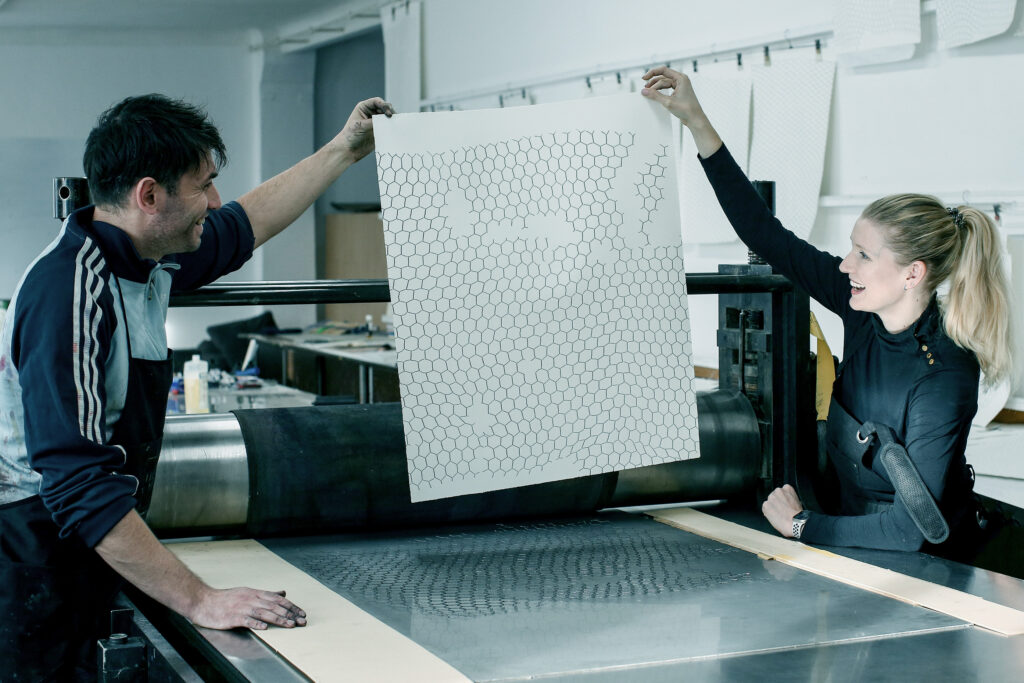
The finished plate is inked with oil paint using a hand roller and wiped with netting, fine, smooth paper and the heel of the hand. The process must be repeated for each individual imprint and is the same as with a classic etching.
The plate is then printed onto moistened handmade paper using an etching press.
Lengthy drying of the paint and careful drying and smoothing of the sheets complete the process.
Due to the relief-like application of color – there is more color on the paper in the dark areas than in the mid-tones and the highlights – the sheets have an inimitable charisma. This quality can only be achieved with hand gravure printing.
The artist
Roman Pfeffer
Roman Pfeffer *1972 in Upper Austria, Austria. Lives and works in Vienna and Upper Austria.
Roman Pfeffer's work traverses various mediums and concepts, often reflecting a deep engagement with the socio-political landscape and human condition. He is known for his explorations in postwar and contemporary art, where he delves into the intersections between traditional forms and innovative techniques. His artistic practice extends across diverse disciplines, including painting, sculpture, installation, performance, and new media. Pfeffer's creations are characterized by their dynamic and experimental nature, incorporating elements of abstraction, symbolism, and narrative. Through his multidisciplinary approach, he invites viewers to engage critically with complex themes such as memory, identity, and cultural heritage. Pfeffer's educational background in both Vienna and England has undoubtedly influenced his artistic vision, fostering a global perspective that transcends geographical boundaries. His involvement with TransArts at the University of Applied Arts in Vienna further underscores his commitment to interdisciplinary collaboration and exploration. In exhibitions worldwide, Pfeffer's works have captivated audiences with their thought-provoking concepts and visually arresting aesthetics. Whether through large-scale installations that transform gallery spaces or intimate paintings that evoke contemplation, Pfeffer continues to push the boundaries of contemporary art while offering profound insights into the human experience.