The technique
Alugraphy
Classic lithography is made with stones. Based on this, the process has been further developed since the 1950s and soon also practiced in art prints.
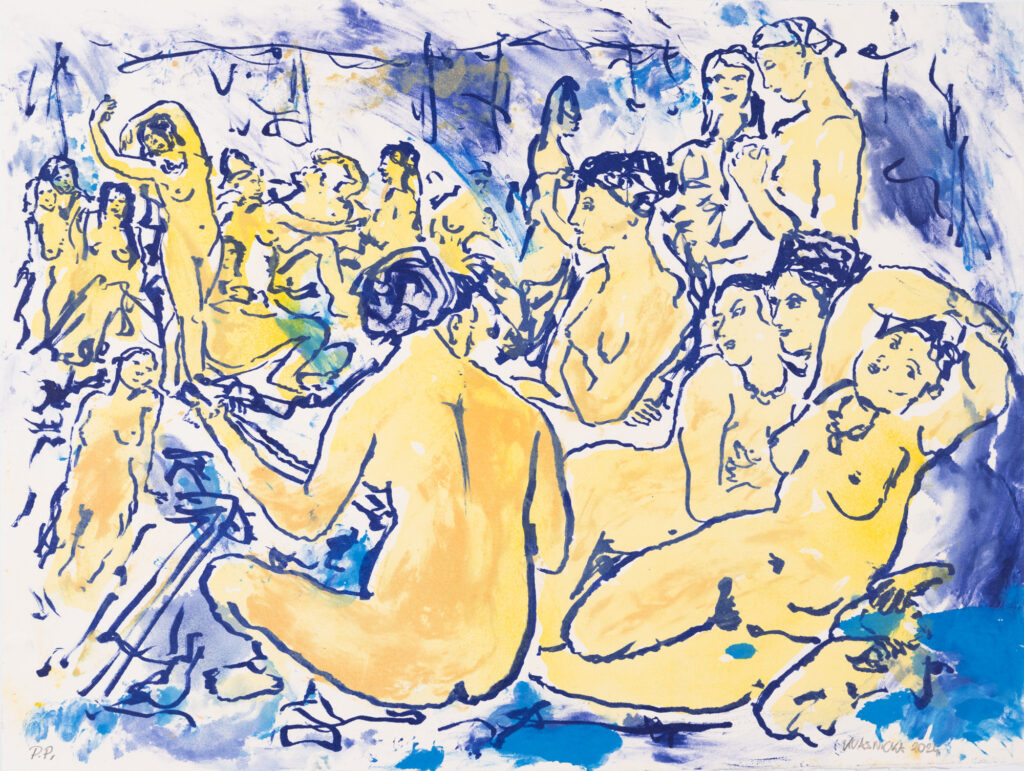
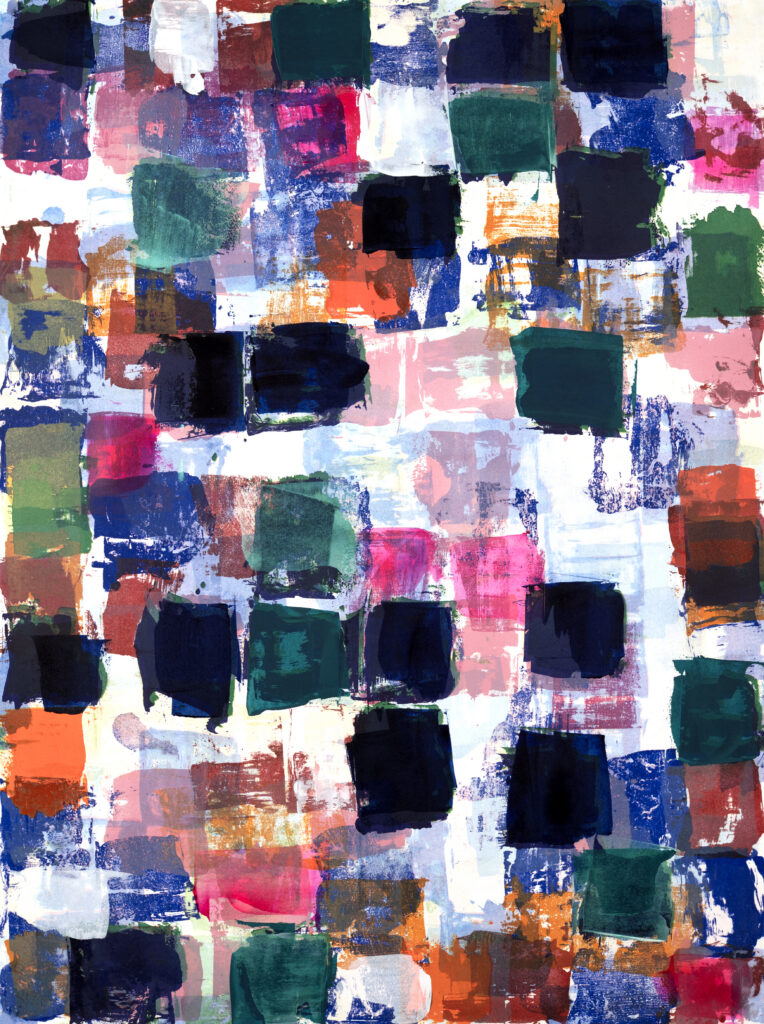
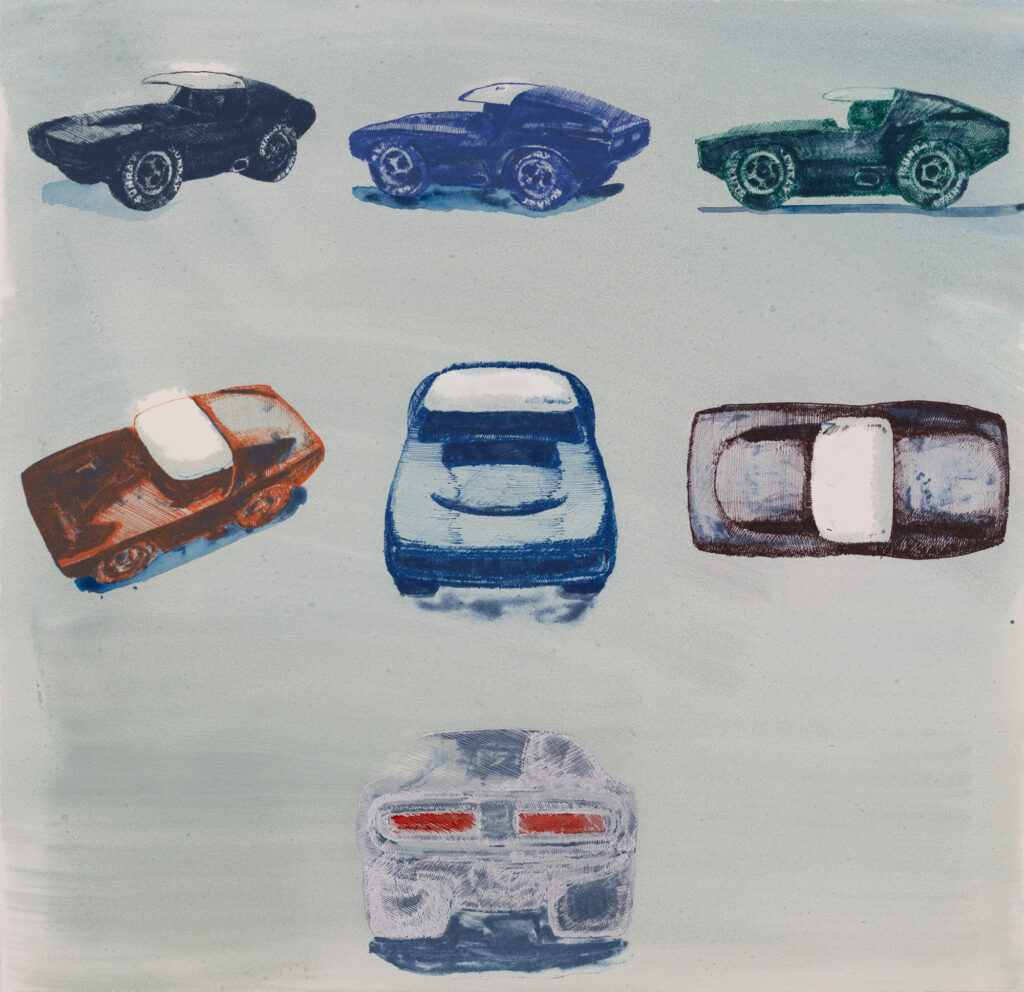
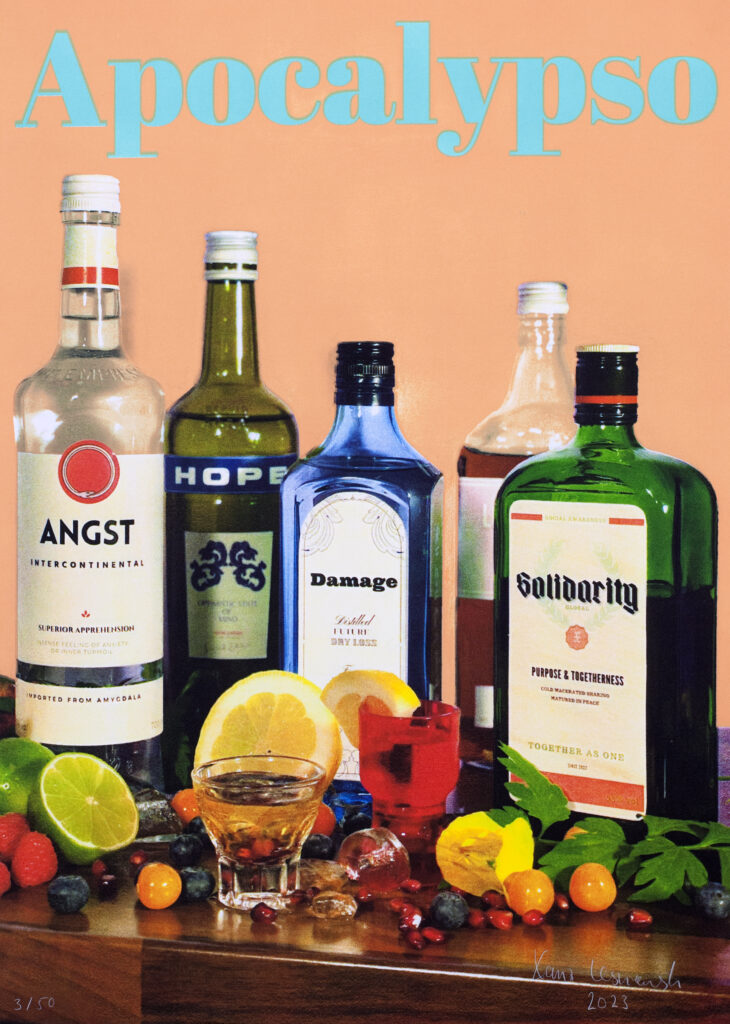
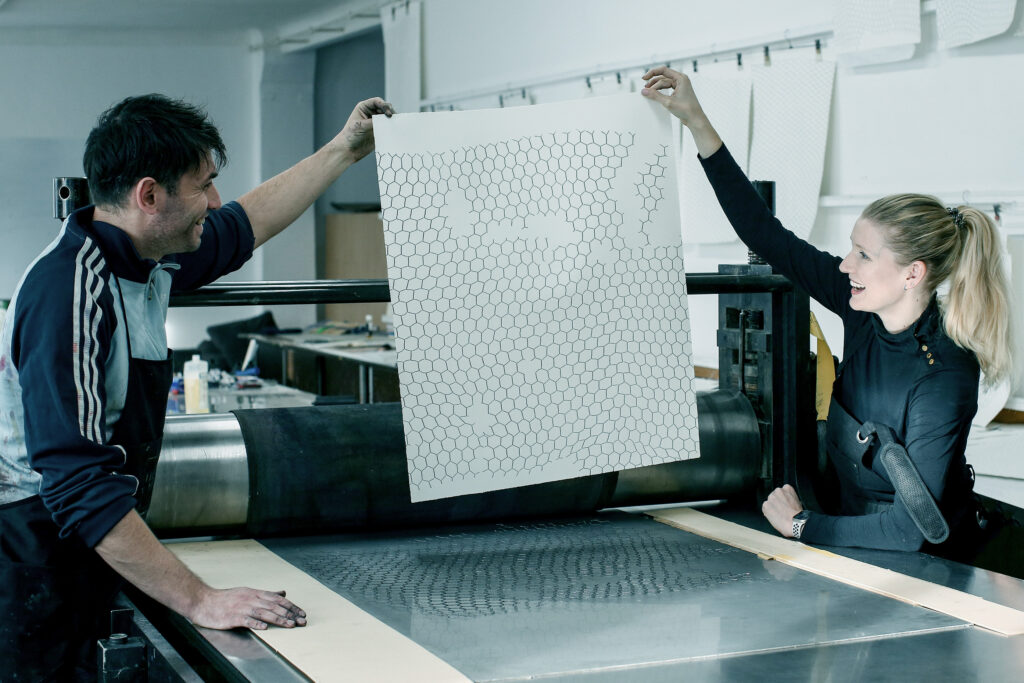
Alugraphy uses thin aluminum plates with a UV-sensitive layer. The motif is exposed onto the aluminum plate using a strong UV lamp and then fixed to the plate in a chemical bath. After this process, the plate can be inked and printed.
Analog: The motif can be drawn or painted on a transparent foil using various materials such as oil pastels, graphite, lightfast felt-tip pen, acrylic paint or black ink.
Digital: The motif can be digitally separated or broken down into the basic colors or extra layers. The plates are made from these layers.
This planographic printing process is based on the following principle: Exposing the plate creates oleophilic (oil-friendly) and hydrophilic (water-friendly) areas. When the plate is inked, only the oleophilic areas accept the printing ink and thus create the printed image.
The plates are inked by hand and printed color by color or plate by plate in the etching press. The plates must be cleaned and colored again after each process.
Kurt Zein used this technique to develop unique print editions as a specialty of the workshop at the end of the 1980s.
The artist
Christian Kvasnicka
Christian Kvasnicka *1953 in Vienna, Austria. Lives and works in Vienna and Lower Austria.
Kvasnicka is a painter, who also explores other art forms such as graphics and sculpture. He studied at the Academy of Fine Arts in Vienna from 1973 to 1980. From 1976 to 1983, he served as the head of the cultural department at the former Länderbank and co-founded the “Fotogris” collection and the Länderbank Art Collection (now the BA-CA Kunstforum of Bank Austria Creditanstalt). From 1995-2020 he has been the director of the Art Collectors Club of the Wiener Rote Kreuz (Viennese Red Cross), where renowned Austrian and international artists support the research fund of the Wiener Rote Kreuz through limited editions. Kvasnicka has worked as a set designer and engaged in light-painting in collaboration with Renato Zanella and the Vienna State Opera Ballet in 2002. He also curated the Independent Art Fair New York in 2002 and 2003 in collaboration with Michele Boos/Art Tribune New York. Currently, he serves as an Artistic Advisor for the “Business for Art – Maecenas”. Kvasnicka's work has gained international recognition, resulting in his pieces being found in collections around the world.